On March 9, 2026, Qiuwei Pan from Erasmus MC University Medical Center Rotterdam (the Netherlands), Wang Wenshi from Xuzhou Medical University, and William M. de Souza from the University of Kentucky (USA) jointly achieved important progress in the field of viral prevention and control. Their latest research, titled "Human liver-derived organoids recapitulate Oropouche virus infection and manifestation, enabling antiviral drug discovery", was published in Cell Reports Medicine, a sub-journal of Cell (a top-tier journal in CAS Zone 1, IF = 10.6). This work provides critical scientific evidence for the clinical treatment and drug development of Oropouche virus (OROV).
Oropouche virus (OROV) is a neglected and re-emerging arbovirus. It typically causes self-limiting febrile illness but may also lead to severe complications. Currently, there are no licensed vaccines or specific therapeutics available, creating an urgent need for its prevention, control, and clinical management.
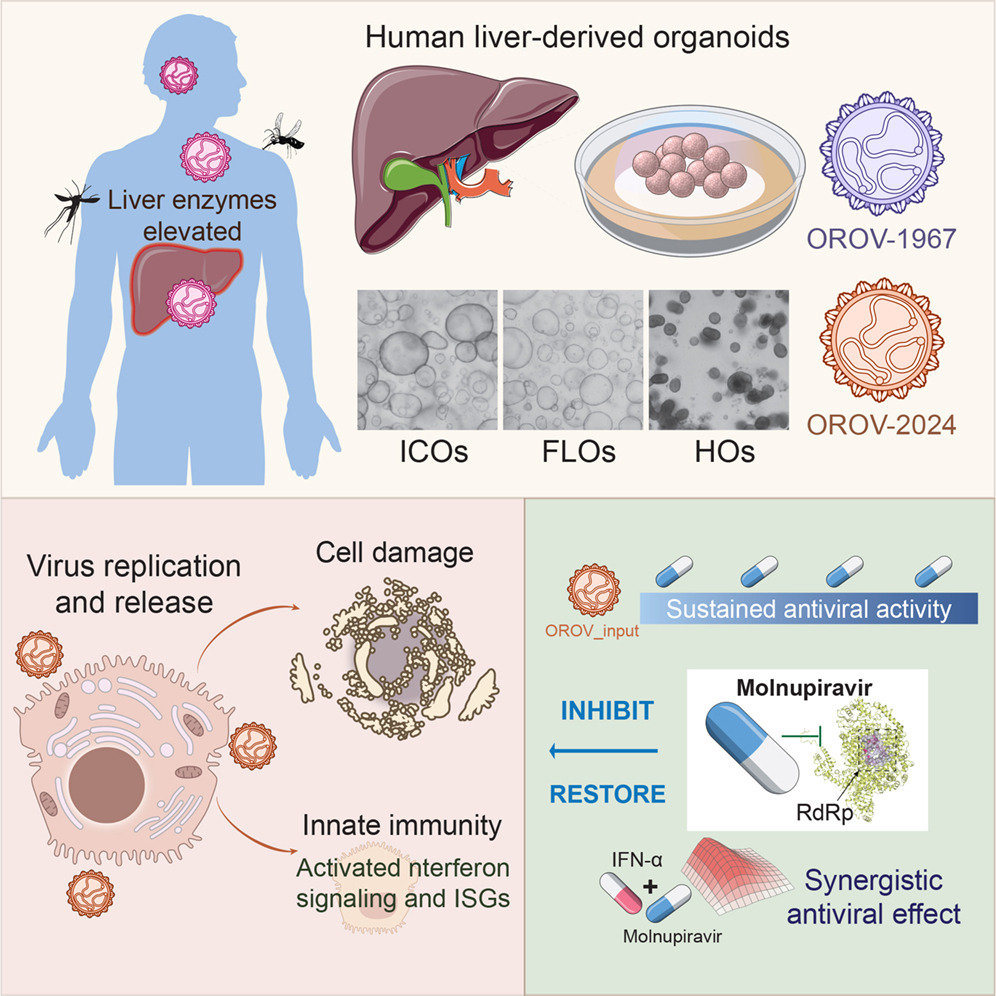
Through clinical data analysis, this study identified elevated liver enzymes and impaired liver function as typical manifestations in OROV-infected patients. Further validation using human liver-derived organoid models confirmed that the liver is a key target organ of OROV infection: the virus efficiently infects liver organoids and induces severe cytopathic damage. Transcriptomic analysis revealed robust virus-host interactions during infection, which significantly activate the interferon-stimulated gene (ISG) pathway and initiate cell death-related signaling pathways. Meanwhile, exogenous interferon-α was shown to effectively inhibit viral replication.
Notably, using a drug repurposing screening platform, the research team verified that molnupiravir, an already clinically approved antiviral agent, can potently suppress OROV replication by targeting the viral RNA-dependent RNA polymerase and alleviate virus-induced cytopathic effects. Furthermore, the combination of molnupiravir and interferon-α exerts a synergistic antiviral effect, offering a feasible therapeutic regimen for the clinical treatment of OROV infection.
This research successfully fills the knowledge gap in the pathogenesis of OROV, rapidly identifies clinically translatable antiviral strategies, and significantly enhances the global emergency response and clinical management capacity against the re-emergence of this virus. It also provides an efficient and replicable research model for mechanistic studies and rapid drug screening against other emerging and re-emerging viruses.
Article link: Human liver-derived organoids recapitulate Oropouche virus infection and manifestation, enabling antiviral drug discovery - PubMed

