Recently, Jiangsu Engineering Research Center for Precision Diagnosis and Treatment of Polygenic Major Diseases, School of Life Sciences, has achieved a number of important advances in research on disease pathogenesis. Focusing on interdisciplinary fields involving heredity, environment, gut microbiota, ontogeny and aging-related disorders, multiple research groups have successively published high-level research outputs, laying a scientific foundation for the precision diagnosis and treatment of relevant diseases.
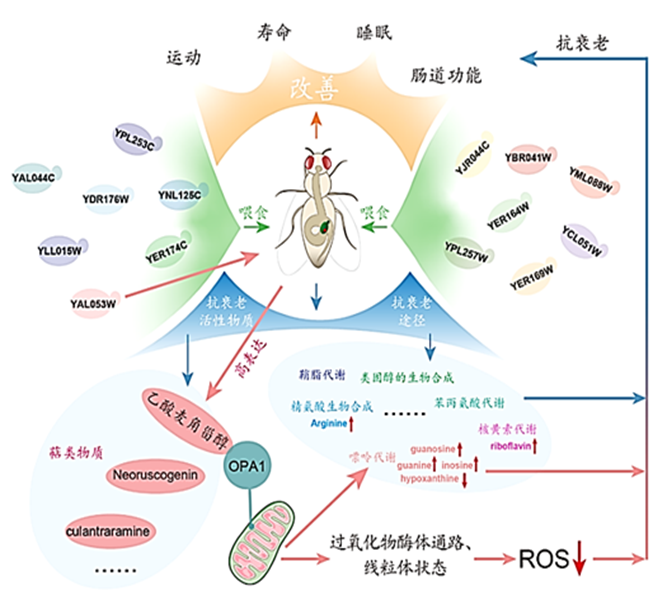
The research team led by Zhu Zuobin focuses on the molecular mechanisms underlying the regulation of host health by gut microbiota. Centered on the core scientific question of “how genetic variation in gut microbiota modulates host health”, the team has consecutively published five serial research papers in internationally renowned journals including Advanced Science and Gut Microbes. This series of studies systematically reveals that genetic variation of gut microbiota affects the mitochondrial energy metabolism pathways in hosts via metabolic reprogramming, thereby regulating host lifespan, reproduction and social behaviors. The findings establish the critical role of the “microbe-host mitochondrial axis” in the regulation of aging and behaviors, and provide important theoretical support for developing gut microbiota-targeted health intervention strategies.
Link to the original article:
1: https://advanced.onlinelibrary.wiley.com/doi/10.1002/advs.202505469
2: https://pmc.ncbi.nlm.nih.gov/articles/PMC12309553/
3: https://pubmed.ncbi.nlm.nih.gov/40223740/
4: https://enviromicro-journals.onlinelibrary.wiley.com/doi/10.1111/1751-7915.70248
5: https://www.the-innovation.org/article/doi/10.59717/j.xinn-life.2025.100158
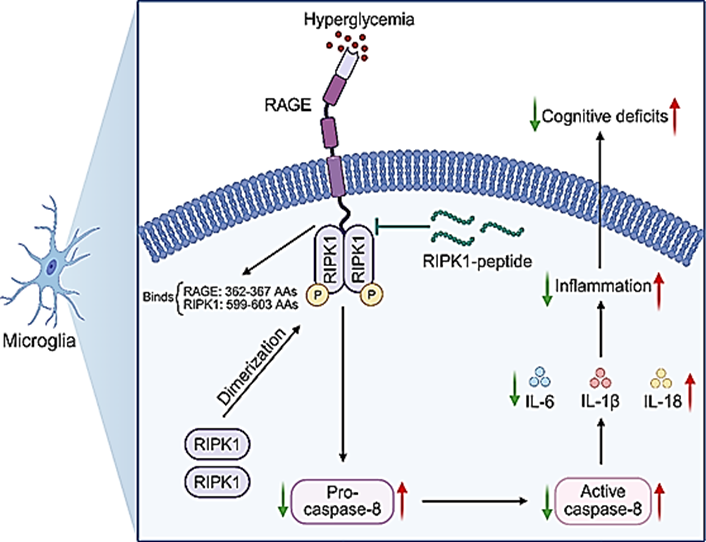
Zhou Xiaoyan, Ying Changjiang and Song Yuanjian are corresponding authors of a study on the neuroinflammatory mechanisms underlying cognitive impairment associated with metabolic diseases published in Journal of Neuroinflammation. The study reveals that RIPK1 binds to soluble RAGE (sRAGE) and activates inflammatory signaling pathways in microglia, thereby triggering diabetes-related cognitive dysfunction. Furthermore, the research team developed a brain-targeted intervention strategy that effectively blocks the interaction between RIPK1 and sRAGE and markedly alleviates high-glucose-induced neuroinflammation and cognitive damage. The findings provide potential drug intervention targets for the prevention and treatment of central nervous system complications of diabetes.
Link to the original article:
https://jneuroinflammation.biomedcentral.com/articles/10.1186/s12974-025-03489-1
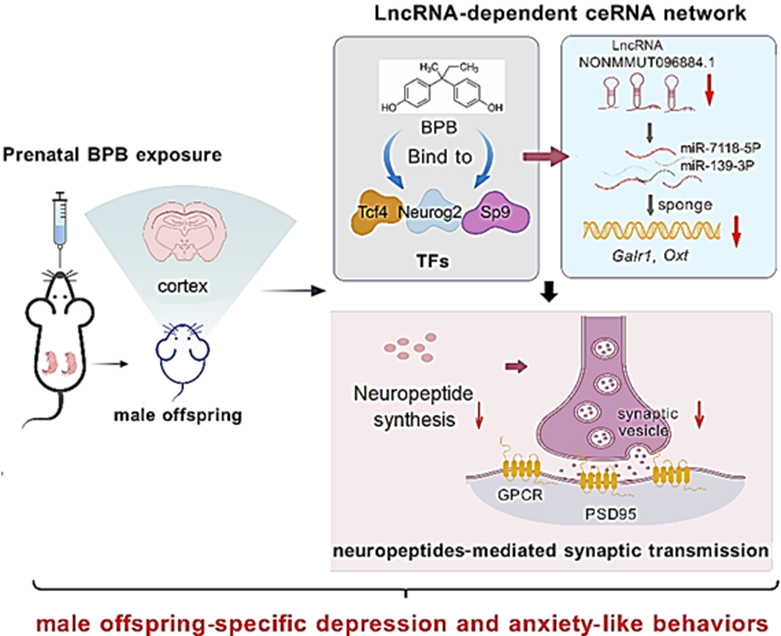
Associate Professor Yan Wei collaborated with Associate Professor Yue Huifeng from Shanxi University as co-corresponding authors to complete research concerning the impacts of environmental endocrine disruptors on neural development. The research article was published in Journal of Hazardous Materials. This work systematically elucidates the molecular mechanism by which bisphenol B (BPB) impairs synaptic transmission and induces adolescent depressive and anxiety-like behaviors through disrupting the lncRNA-miRNA-neuropeptide ceRNA regulatory network. The study not only reveals the male-specific neurodevelopmental toxicity of BPB at environmentally relevant exposure doses, but also offers a novel scientific perspective for understanding how environmental factors contribute to the pathogenesis of neuropsychiatric disorders.
Link to the original article:
https://www.sciencedirect.com/science/article/abs/pii/S0304389425030146
All the above series of achievements take Xuzhou Medical University as the first affiliation. Covering multiple research dimensions including microbe-host interaction, regulation of metabolic inflammation and environmental epigenetics, these findings jointly establish a systematic research framework for the pathogenesis of polygenic major diseases, and boost disciplinary development and academic influence of the university in the fields of precision medicine and disease mechanism research.
(First reviewer: Zhu Zuobin; Second reviewer: Gao Can; Third reviewer: Li Chong)

