In response to the national strategy for educational digitalization and to promote the deep integration of AI technology with basic medical experimental teaching, while jointly exploring new pathways for medical curriculum development in the context of digitalization and intelligence, the School of Basic Medical Sciences successfully held the second session of its series training activities on digital-intelligent course development on December 17. The event took place in Classroom C202 of the Main Teaching Building on the main campus. School leaders, directors of various teaching and research departments, key faculty members, and relevant staff attended the activity, which was presided over by Song Yuanjian, Vice Dean of the School of Basic Medical Sciences.
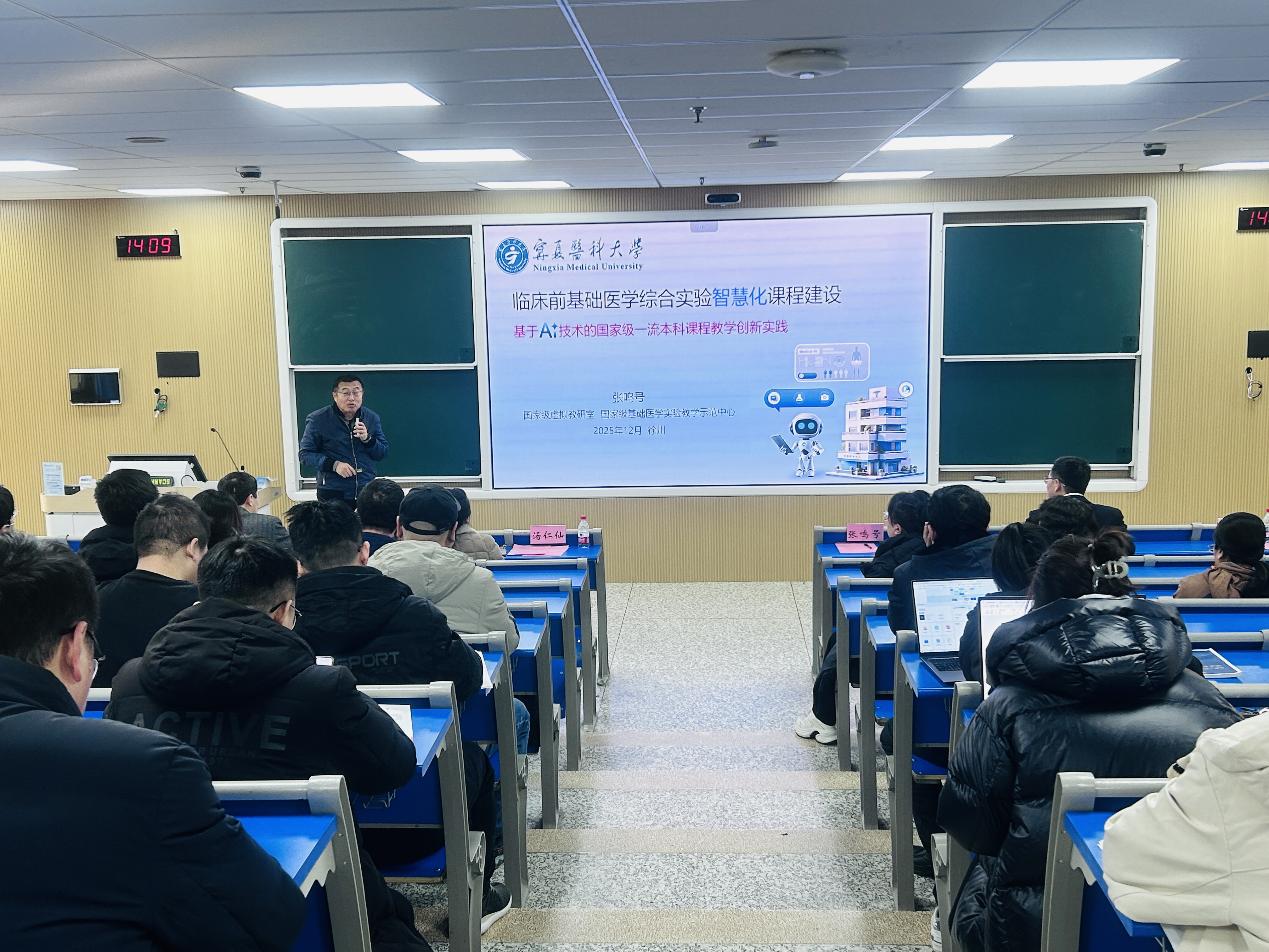
Professor Zhang Minghao, Director of the Department of Pathophysiology at Ningxia Medical University and head of a national-level virtual teaching and research department, was invited to deliver a keynote report titled "Intelligent Course Development for Preclinical Comprehensive Basic Medical Experiments: Innovative Teaching Practices for National-Level First-Class Undergraduate Courses Based on AI Technology." Professor Zhang shared the process of leading his team to establish the Preclinical Comprehensive Basic Medical Experiments course. By adopting a "virtual + physical" teaching model and constructing a comprehensive "AI-assisted teaching, learning, research, and management" system, the course achieves functions such as customized virtual instructors, automated lesson plan generation, automated grading of lab reports, 24/7 intelligent Q&A, and knowledge graph construction. This approach shifts the role of educators from "dominant instructors" to "facilitators," providing a replicable model and valuable insights for the development of digital-intelligent medical courses.
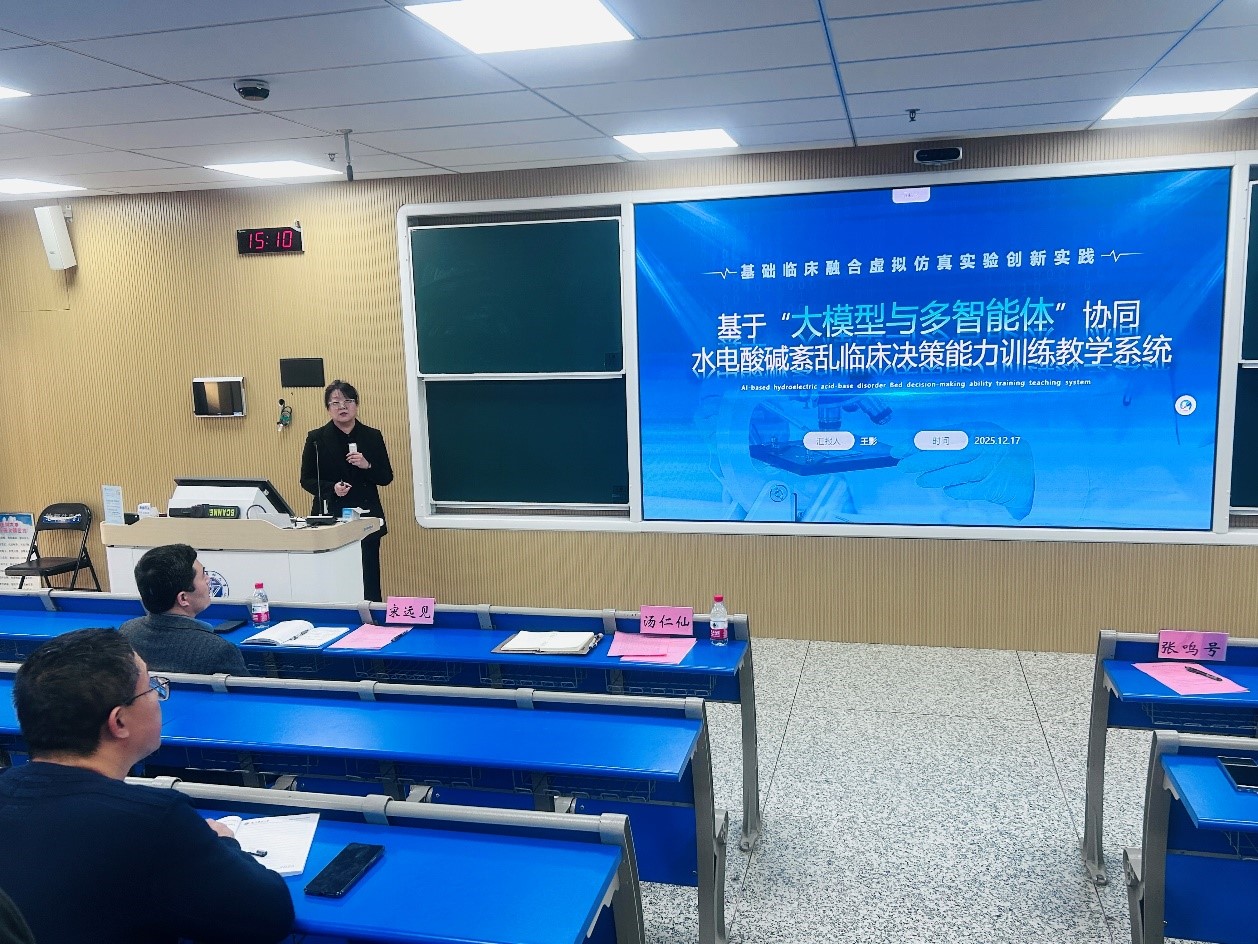
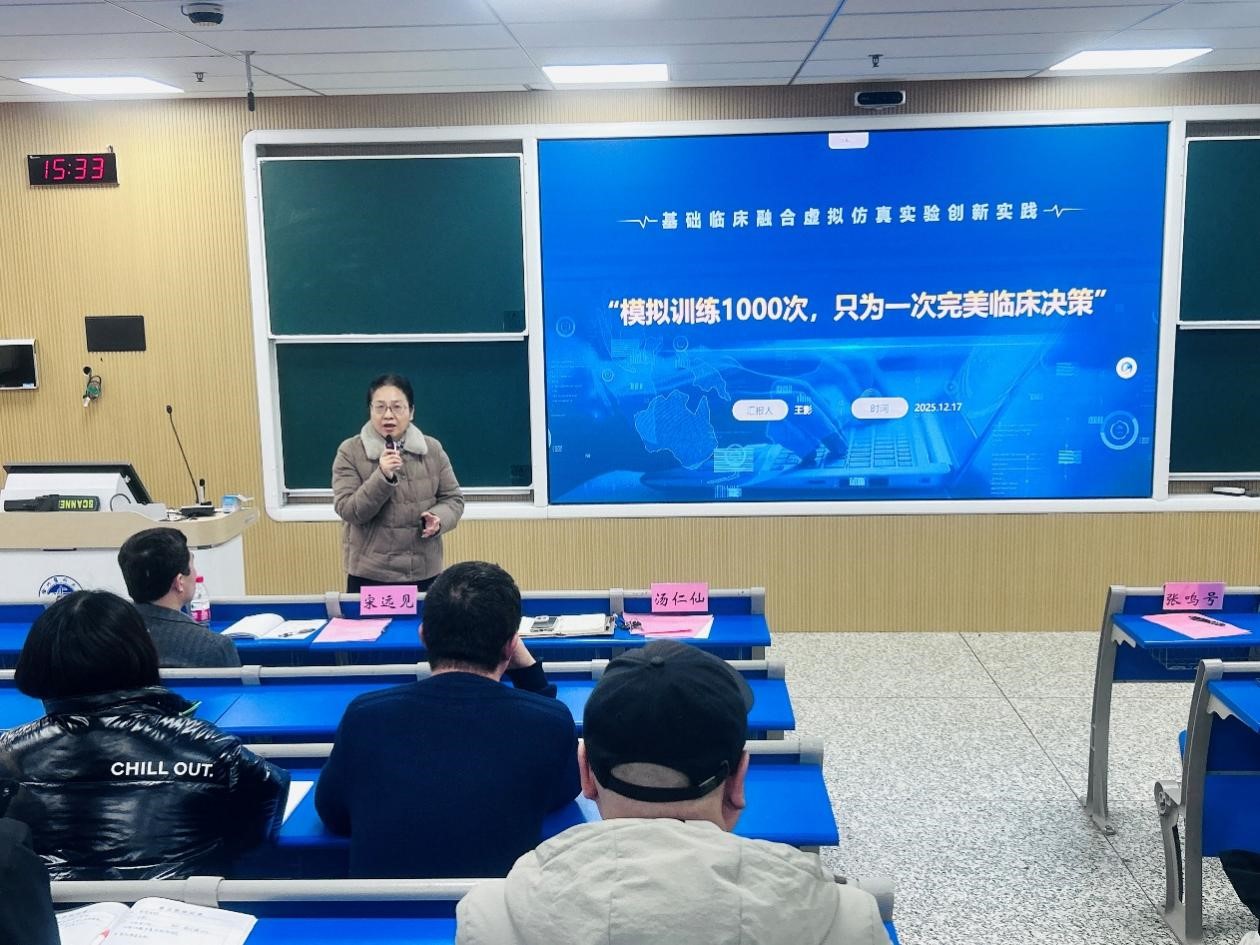
Associate Professor Wang Ying from the Department of Pathophysiology at the School of Basic Medical Sciences delivered a report titled "A Teaching System for Training Clinical Decision-Making Abilities in Water-Electrolyte and Acid-Base Balance Disorders Based on the Synergy of 'Large Models and Multi-Agent Systems.'" The report, guided by the core principle of "integrating virtual and physical elements, using the virtual to complement the physical," highlights the deep empowerment of AI. It constructs an inquiry-based teaching scenario featuring tripartite collaboration among "teachers, students, and machines," significantly enhancing student engagement in the classroom. The system forms a complete "learning-practice-feedback" closed-loop optimization framework, facilitating students' core transition from knowledge memorization to competency development, and offering a more practical and efficient solution for reforming basic medical practical teaching.
During the interactive discussion session, attending faculty engaged in in-depth exchanges with the experts on topics such as ensuring the accuracy of AI-generated responses, database integration, and expanding innovative experiments.
At the conclusion of the event, Tang Renxian, Dean of the School of Basic Medical Sciences, emphasized that developing digital-intelligent courses is a critical initiative for enhancing teaching quality, deepening talent cultivation reforms, and promoting the integration of basic and clinical medicine. The school will further strengthen top-level design, continue advancing the development of five teaching reform teams, and fully integrate AI empowerment into the entire process of "teaching, learning, research, and management" to refine the digital-intelligent course system. Moving forward, the school will remain focused on the demands of educational digital transformation, increase support for digital-intelligent course development, promote the effective implementation of more high-quality digital-intelligent courses, and inject strong momentum into cultivating high-caliber medical professionals.
 (First Review: Song Yuanjian, Second Review: Tang Renxian, Third Review: Han Hongliu)

