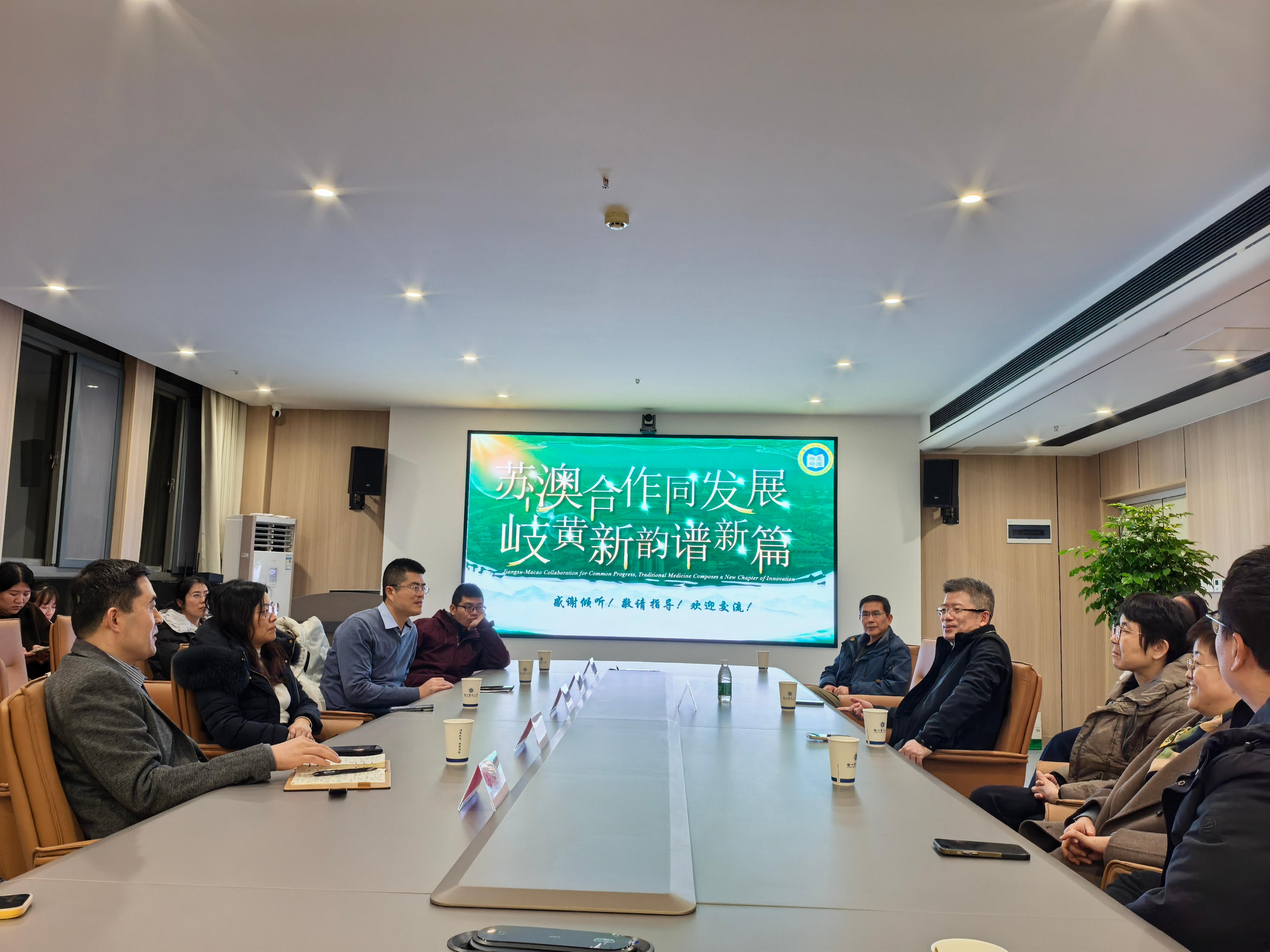
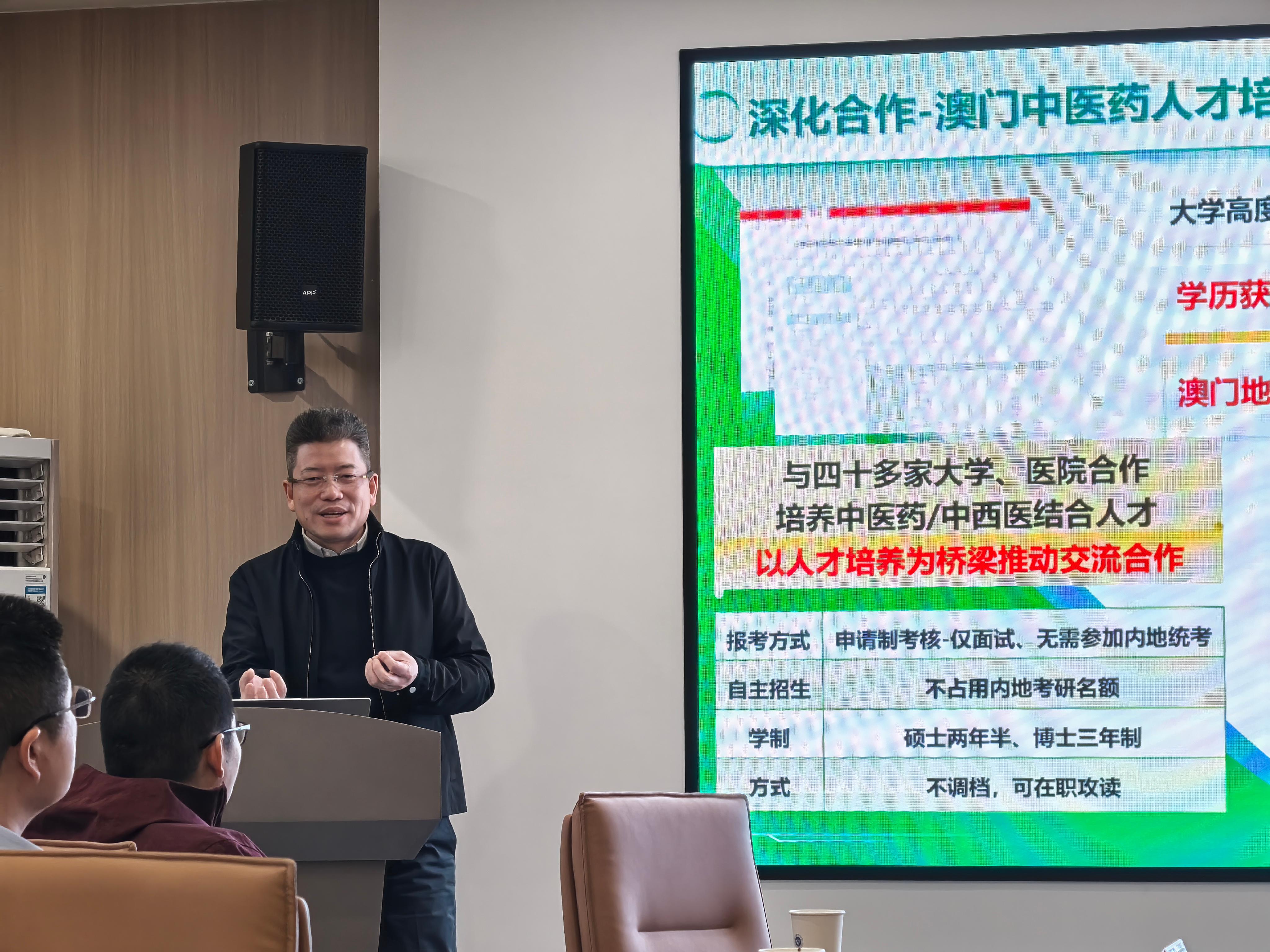
To build a bridge for academic exchanges in the pharmaceutical field between Jiangsu and Macao, promote the in-depth integration of industry, academia, research and application, and boost the modernization and internationalization of traditional Chinese medicine (TCM), on the afternoon of December 25, the School of Basic Medical Sciences specially invited Professor Wu Qibiao, Vice Dean and Doctoral Supervisor of the School of Chinese Medicine at Macau University of Science and Technology, to deliver a lecture titled "Deepening Pharmaceutical Cooperation Between Jiangsu and Macao to Facilitate the Collaborative Development of Industry, Academia, Research and Application". Han Hongliu, Secretary of the Party Committee of the School of Basic Medical Sciences, Song Yuanjian and Wang Wenshi, Vice Deans of the school, as well as representatives of teachers and students attended the lecture, which was hosted by Vice Dean Wang Wenshi.
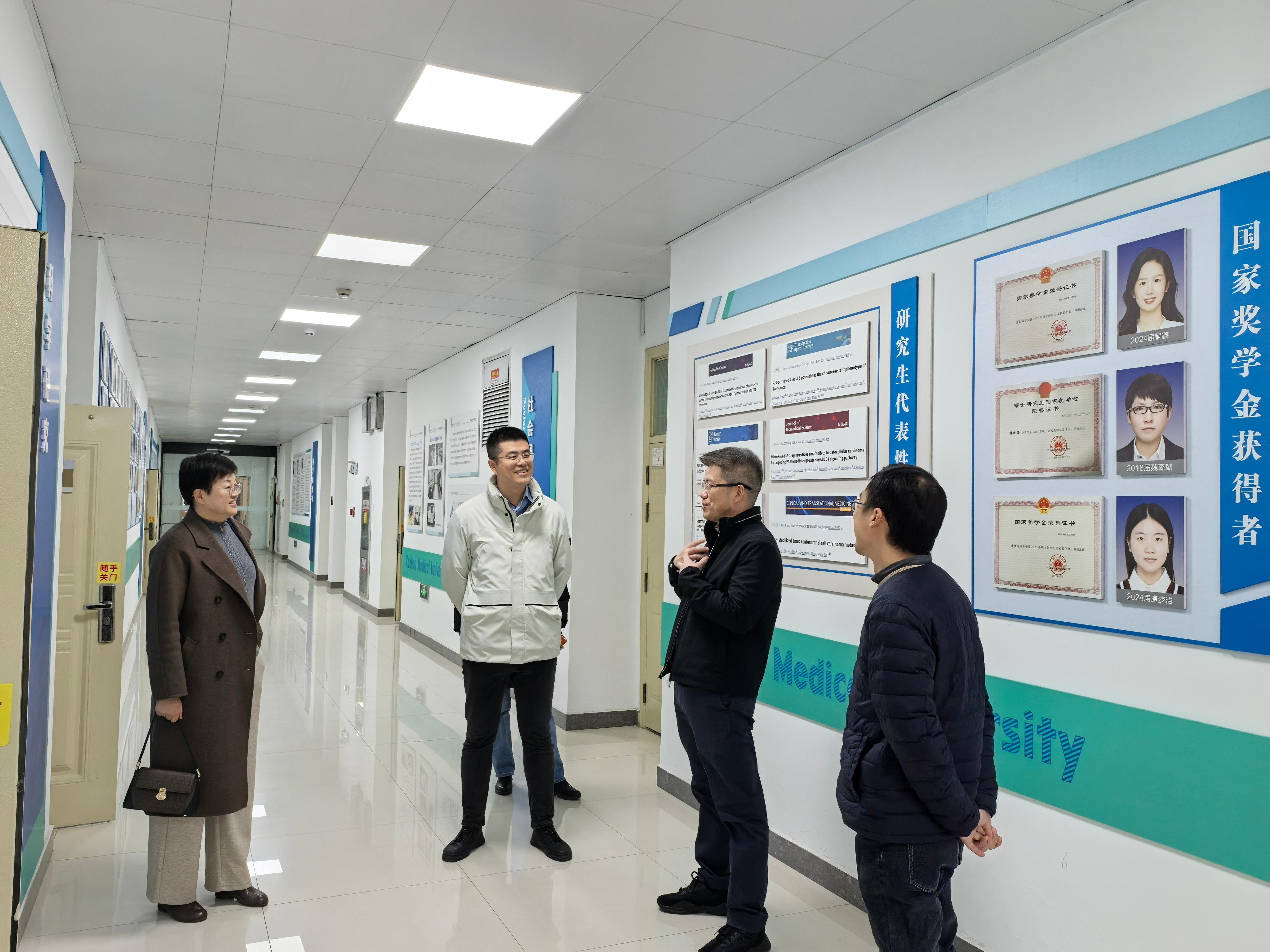
At the beginning of the lecture, on behalf of the school, Vice Dean Wang Wenshi extended a warm welcome to Professor Wu Qibiao for his visit and guidance, and gave a detailed introduction to the school’s core aspects including development history, discipline construction, faculty team, platform building, scientific research, education and teaching, and talent cultivation. Subsequently, focusing on the distinctive research direction of "precision diagnosis and treatment of major chronic diseases", Vice Dean Song Yuanjian comprehensively presented the school’s faculty composition, talent training system, scientific research achievements, progress in industry-education integration, current status of international cooperation and future development plans in this field.
During the lecture, combining his own scientific research and clinical practice at Macau University of Science and Technology, Professor Wu Qibiao systematically elaborated on the historical origins, existing foundation and future potential of pharmaceutical cooperation between Jiangsu and Macao. He pointed out that as a province with abundant TCM resources and a developed pharmaceutical industry, Jiangsu has a high degree of complementarity with Macao in terms of TCM internationalization, standardization, and the transformation of industry, academia and research outcomes. By co-constructing scientific research platforms, jointly cultivating talents, and carrying out collaborative new drug R&D and clinical evaluation, the process of TCM modernization and internationalization can be effectively promoted.
In the interactive session, participating teachers and students conducted in-depth discussions with Professor Wu on hot topics such as the innovation of TCM international cooperation models, institutional and mechanism obstacles in the transformation of scientific research achievements, and the cooperative mechanism for joint training of high-level talents. Professor Wu gave detailed answers to each question raised by the teachers and students one by one, creating a strong academic atmosphere and a lively interactive scene at the venue.
In his concluding speech, Vice Dean Wang Wenshi stated that this lecture has laid a solid foundation for deepening academic exchanges and cooperation in the pharmaceutical field between Jiangsu and Macao. Taking this lecture as an opportunity, the school will further sort out cooperation directions, build cooperation bridges, promote substantive cooperation with universities in Hong Kong and Macao such as Macau University of Science and Technology in scientific research cooperation and talent training, enhance the school’s discipline construction and scientific research innovation capabilities, and contribute more to promoting the modernization and internationalization of traditional Chinese medicine.
(First review: Wang Wenshi, Second review: Tang Renxian, Third review: Han Hongliu)

