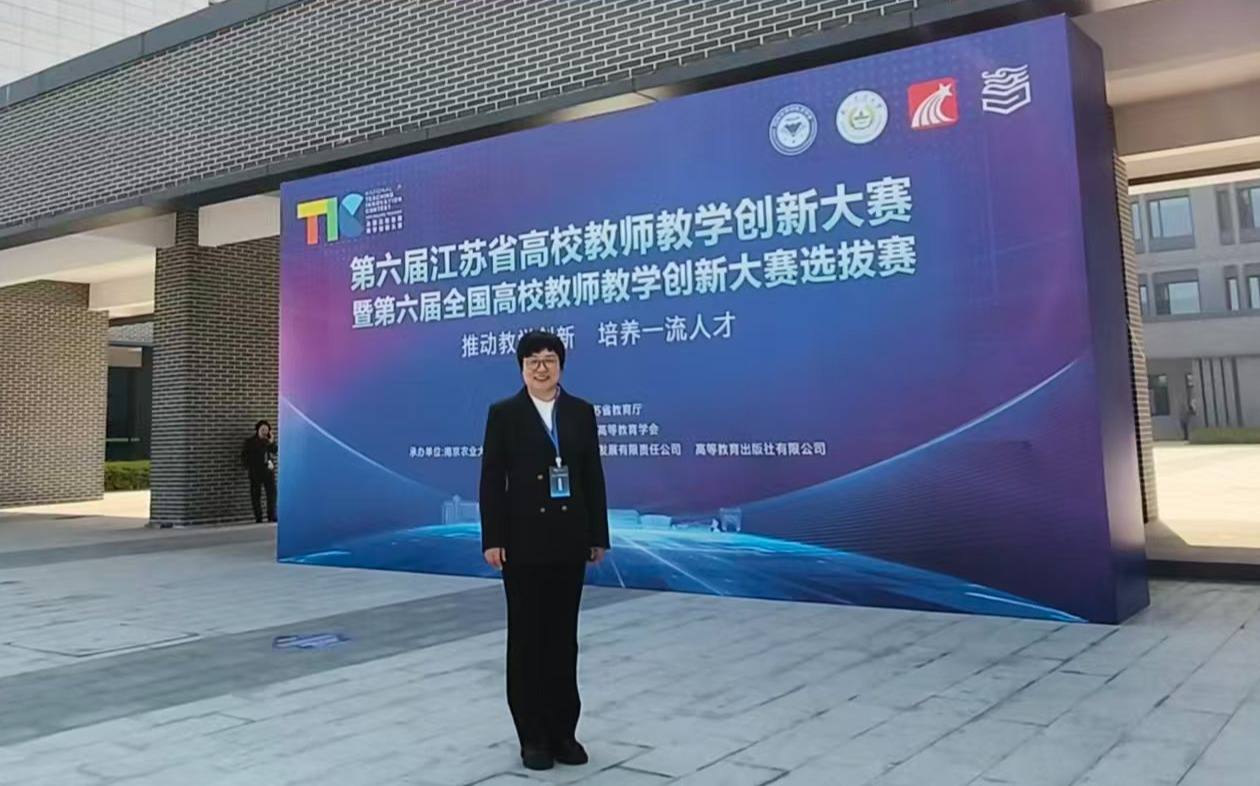
Recently, the Jiangsu Society of Higher Education issued the Notice on Announcing the Winners of the 6th Jiangsu University Teachers’ Teaching Innovation Competition (Higher Education Association of Jiangsu Province〔2026〕No.12). The team led by Professor You Hongjuan from the School of Basic Medical Sciences won the Special Prize with profound medical teaching literacy and outstanding teaching design.
Co-hosted by the Jiangsu Society of Higher Education and Nanjing Agricultural University, this year’s competition attracted 643 entries from 75 undergraduate universities across Jiangsu Province. After rigorous selection through university-level preliminary contests, provincial online evaluation and provincial finals, the competition was exceptionally fierce. Closely adhering to the college’s educational philosophy of “Four-Early Cultivation”, Professor You Hongjuan’s team constructed an integrated innovative model of “basic medicine + clinical cases + smart teaching”. It fully interpreted the high-order nature, innovation and challenge of basic medical courses under the background of the New Medical Science initiative, winning high recognition from the judging experts.
Since the launch of the competition, the university has made top-level arrangements, with the Teacher Teaching Development Center providing full-process and targeted support. Under the guidance of school leaders in charge, the center organized overall coordination and built a full-chain preparation system featuring “launch & mobilization — special training — expert polishing — simulated teaching drills”. The Party and administrative leadership of the school attached great importance to the event, coordinated high-quality resources, and built a high-standard preparation platform to offer all-round support for participating teachers. The joint efforts of the university and the school laid a solid foundation for this remarkable achievement.
Moving forward, the school will further implement the philosophy of “promoting teaching, reform and innovation through competitions”, improve the long-term mechanism for teaching innovation, and strive to cultivate high-caliber medical talents with both moral integrity and professional competence. It will contribute solid strength in basic medicine to the university’s goal of building a high-level medical university and support the “Healthy China 2030” Strategy.
(First Review: Kong Delong; Second Review: Tang Renxian; Third Review: Han Hongliu)

