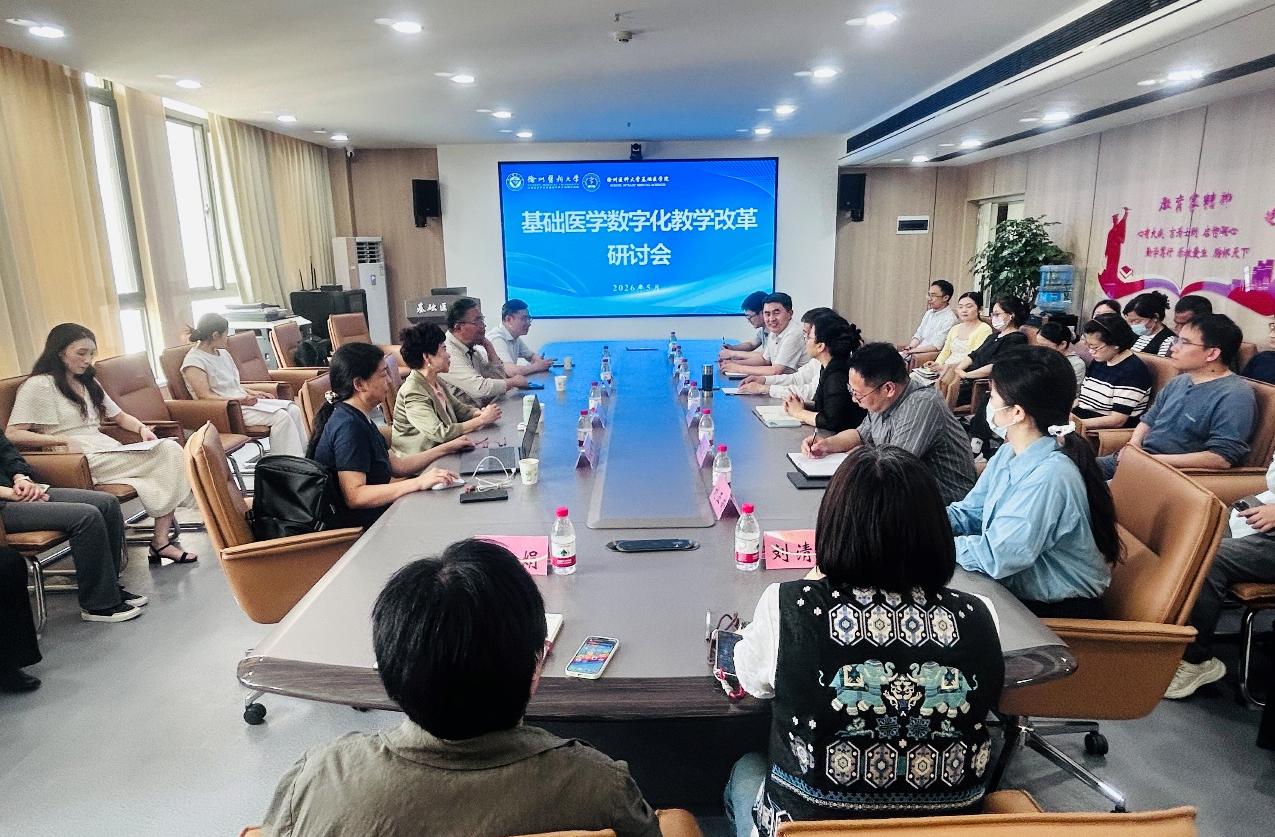
On May 19, the School of Basic Medical Sciences successfully held a seminar on the digital teaching of basic medicine to accelerate the digital transformation of basic medicine teaching. Professor Zeng Si'en from Guilin Medical University, Associate Professor Hua Dong from Nanjing Medical University, Lu Zhiping, Chairman of Zhangjiagang Huayi Teaching Equipment Co., Ltd., and Professor Guo Yundi, Director of the Pathology Research and Development Department, were invited to attend the seminar. Professor Zheng Kuiyang, former President of Xuzhou Medical University, Associate Professor Song Yuanjian, Deputy Director of the Academic Affairs Office, as well as school leaders and teachers from relevant teaching and research sections and laboratories of the school participated in the event.
Centering on the integration path of artificial intelligence and morphological experimental teaching, the seminar aimed to gather expert insights, build industry consensus, promote the quality upgrading of the National Experimental Teaching Demonstration Center for Basic Medicine, and drive the high-quality development of basic medicine teaching.
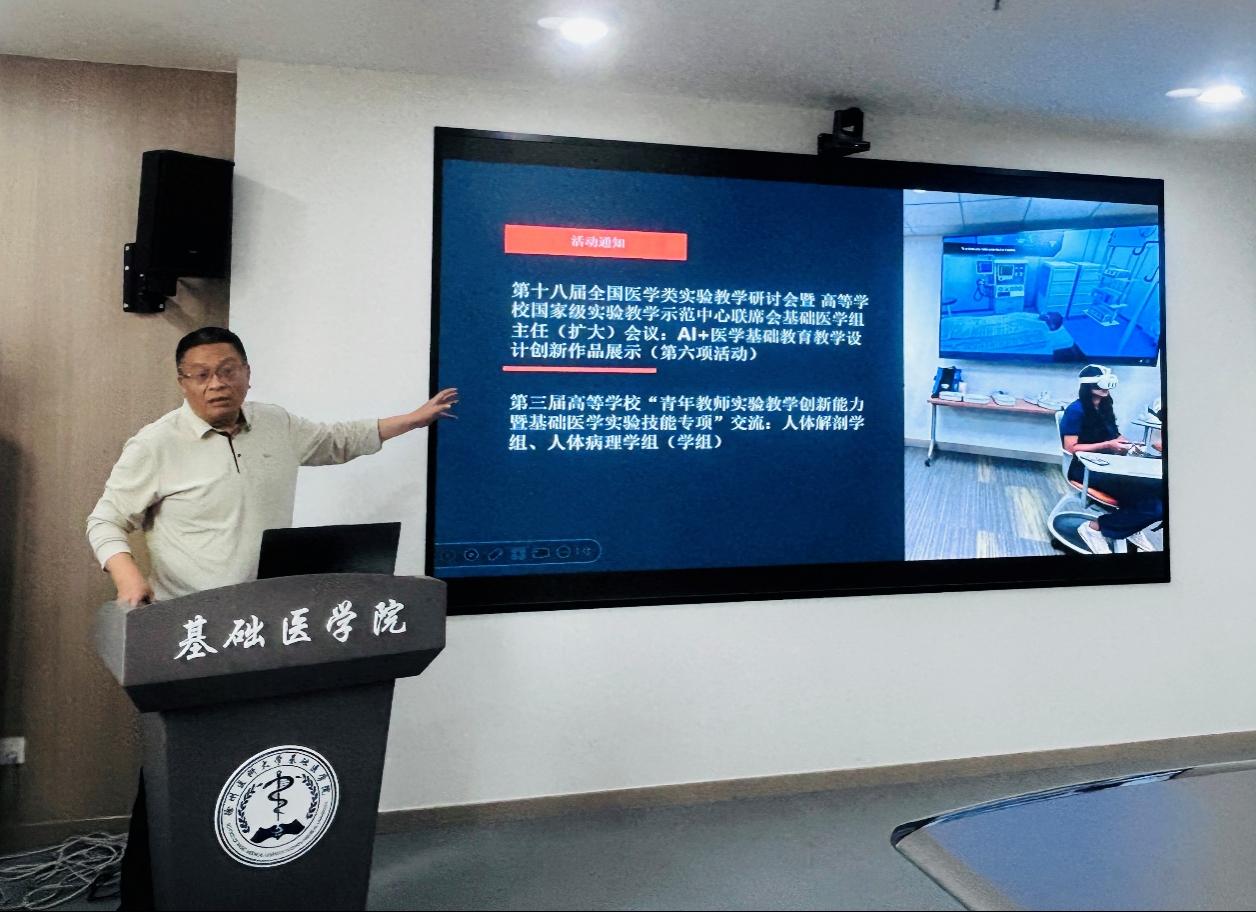
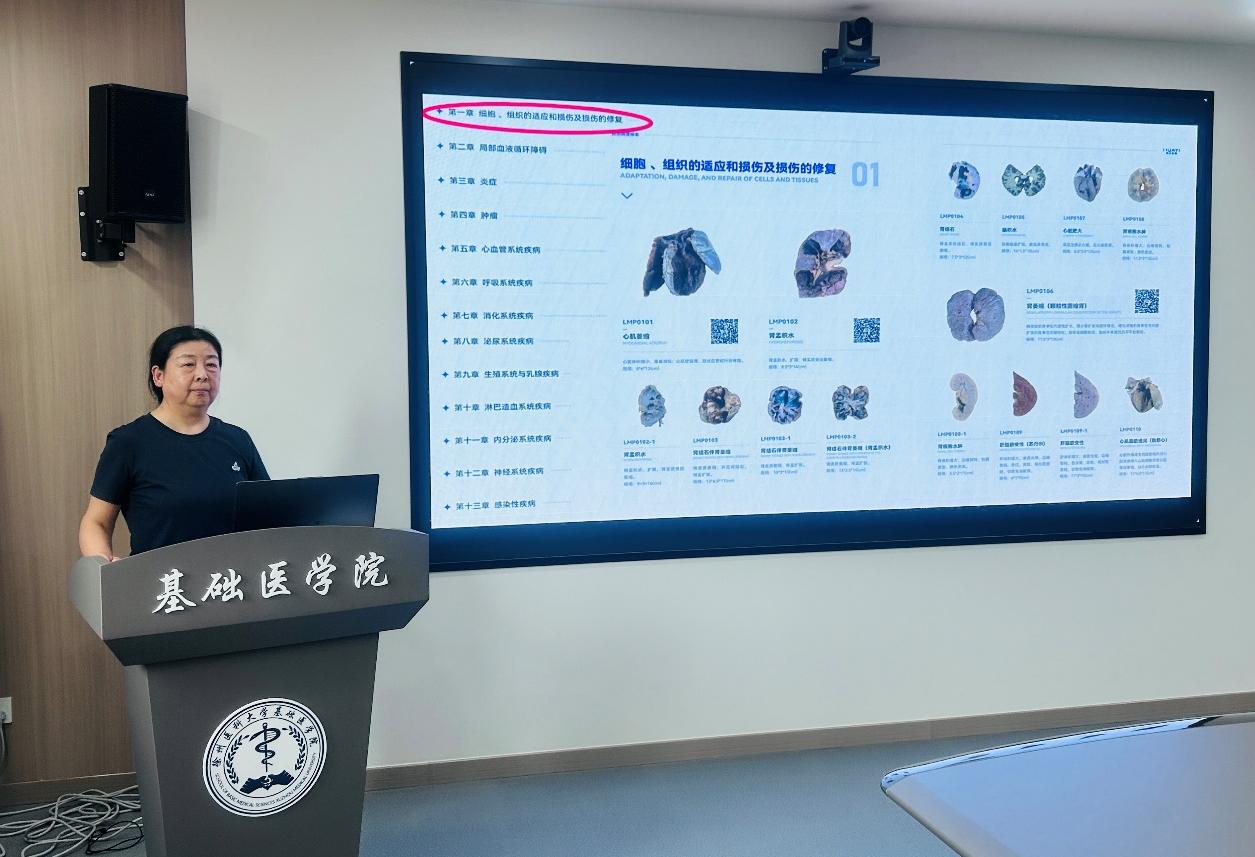
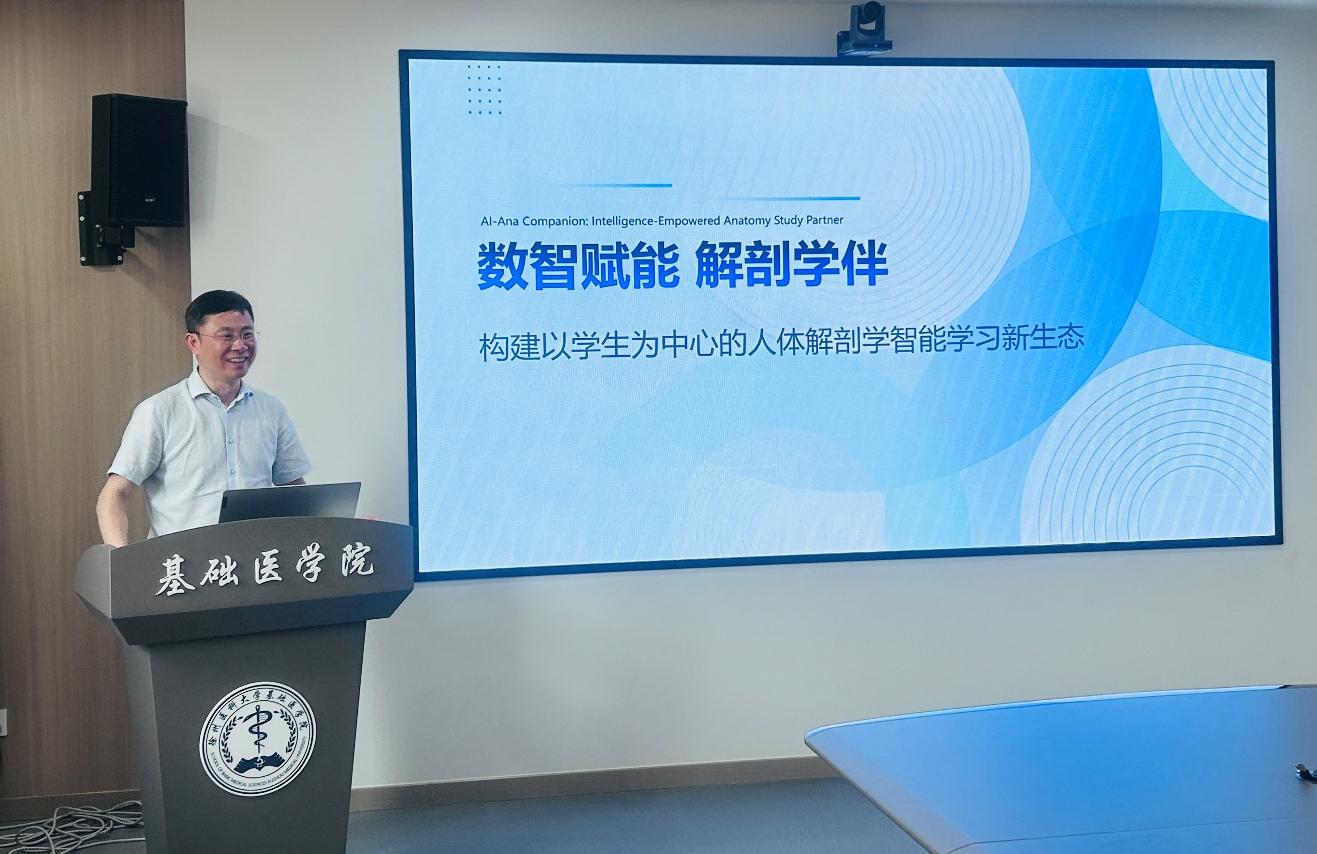
At the beginning of the seminar, Song Yuanjian extended a warm welcome to all the attending experts. He pointed out that the rapid iteration of artificial intelligence technology has brought new opportunities and challenges to basic medicine teaching. With the theme of "Digital Intelligence Empowerment, Anatomy Companion – Building a Student-Centered Intelligent Learning Ecosystem for Human Anatomy", Hua Dong elaborated on the core functions of the "Anatomy Companion" platform, including AI large models, multi-modal resource linkage and personalized learning engines, as well as its significant value in stimulating students' proactive inquiry awareness and promoting the digital transformation of disciplines. Guo Yundi delivered a special report on the advantages of new digital simulation models for pathology and anatomy and their role in promoting the integrated teaching mode of theory and practice. Focusing on the theme of "Reform and Innovation of Basic Morphological Teaching in the Digital Intelligence Era", Zeng Si'en stressed that digital simulation models and AI tools should be integrated into theoretical teaching, the integration of theory and practice should be advanced in experimental teaching, and priority should be given to cultivating students' clinical thinking and post competency. Zheng Kuiyang emphasized the need to leverage AI empowerment to solve key teaching problems, implement the integration of theory and practice to improve classroom efficiency, cultivate students' post competencies in line with clinical needs, and refine assessment design to realize targeted evaluation, pointing out the direction for subsequent teaching reform. During the exchange and discussion session, participating teachers conducted in-depth discussions on core issues such as school-enterprise cooperative teaching and research and discipline system construction.
Tang Renxian, Dean of the School of Basic Medical Sciences, delivered a concluding speech. She noted that the seminar clarified the implementation path for the integration of artificial intelligence into basic medical morphological teaching and further defined the core direction of teaching reform and school-enterprise collaboration. In the next step, the school will accelerate the implementation and application of digital teaching resources, continuously deepen the reform of basic medicine teaching, and lay a solid foundation and provide strong support for cultivating high-quality medical talents.
(Author: Wang Lei, First Review: Kong Delong, Second Review: Tang Renxian, Third Review: Han Hongliu)

