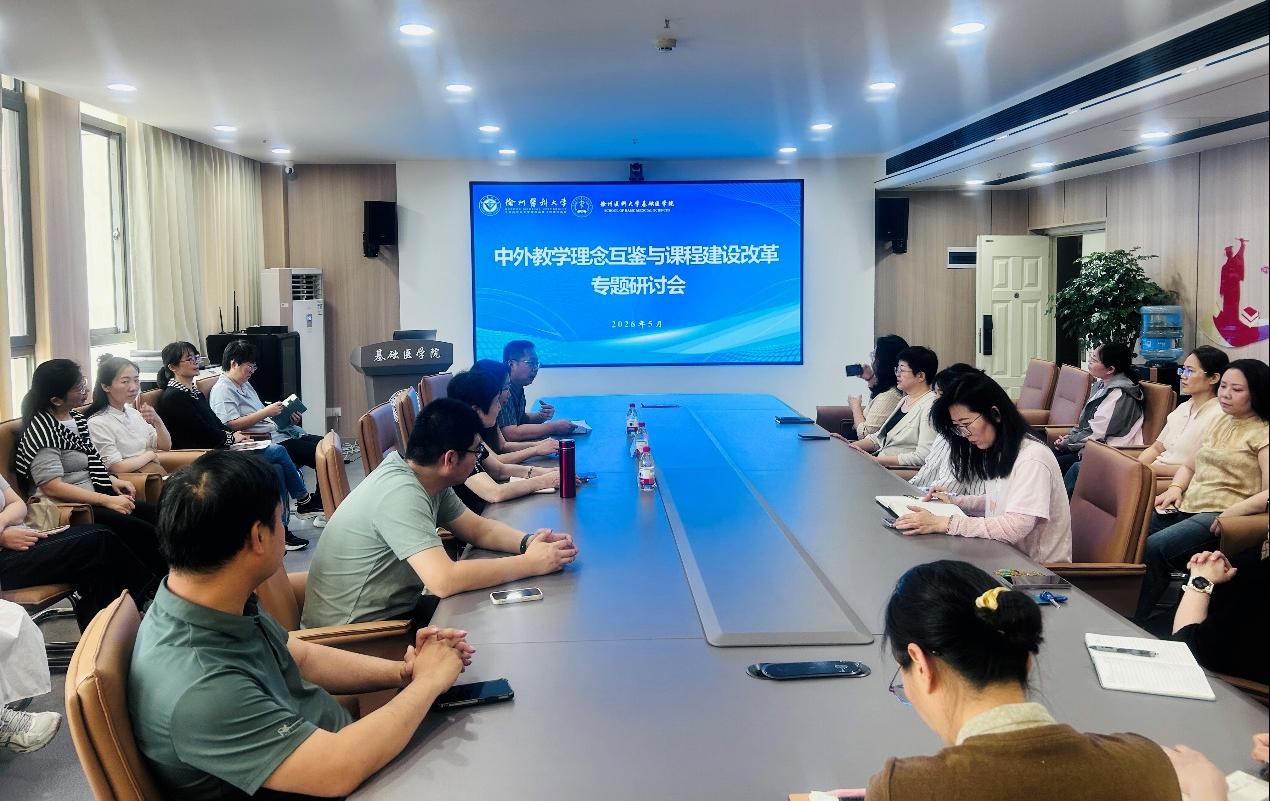
On May 19, 2026, the Seminar on Mutual Learning of Chinese and Foreign Teaching Concepts and Curriculum Construction Reform was successfully held in the conference room (Room 302, East Wing of the Main Teaching Building) of the School of Basic Medical Sciences. Dr. Zheng Fang from the University of Erlangen-Nuremberg, Germany, was invited to deliver a special sharing session. The leadership of the School of Basic Medical Sciences, key teachers from relevant teaching and research sections, and related staff attended the seminar to explore approaches to medical education reform and draw on advanced international teaching experience.
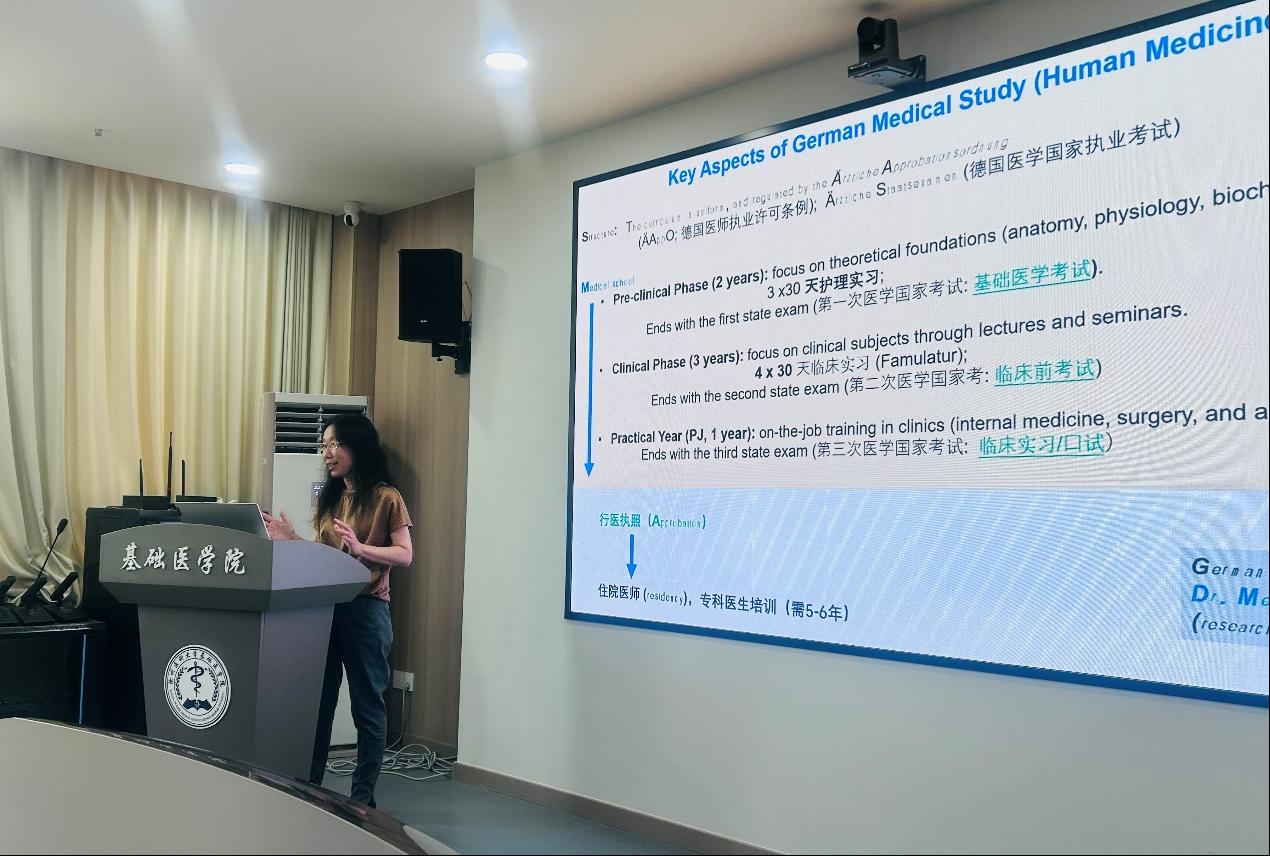
During the seminar, Dr. Zheng Fang systematically shared insights into the full process of medical education in Germany, including its admission and assessment system, physiological curriculum system, and experimental teaching models. She focused on introducing the distinctive features of medical education in German universities, which prioritize practical operation and clinical relevance. The theoretical curriculum adopts a hybrid online-offline teaching mode supplemented by large-class seminars, emphasizing the flexible application of professional knowledge. In terms of experimental teaching, human-based experiments serve as the core component, covering clinically practical items such as electromyography detection, electroencephalography analysis, and nerve conduction velocity testing. Teaching is conducted by professional instructors together with senior student teaching assistants, followed by centralized post-class discussions and independent assessment of experimental courses. This teaching model aims to cultivate students’ abilities in human physiological perception and practical operation.
The interactive session featured enthusiastic discussions. Combining the current status of domestic medical teaching, participating teachers raised in-depth questions concerning curriculum system design, the application of simulation teaching, the selection and optimization of animal experiments, and the reform direction of physiological experiments. Dr. Zheng provided detailed and targeted answers to each question, offering clear guidance for the subsequent optimization of teaching practices.
At the end of the seminar, Vice Dean Kong Delong delivered a concluding speech. He pointed out that both Chinese and German education systems have unique advantages. The German medical education philosophy of prioritizing foundational knowledge, rigorous assessment and clinical practice, as well as its human experiment-based teaching model and teaching-oriented evaluation system, provides valuable reference for the teaching reform of basic medical sciences. Subsequently, the School of Basic Medical Sciences will base its work on national conditions and the university’s realities, draw on strengths to offset weaknesses, continuously optimize curriculum design and innovate experimental teaching models. It will strive to improve the quality of medical talent training and advance the high-quality development of medical education at our university.
(Author: Wang Lei, First Review: Kong Delong; Second Review: Tang Renxian; Third Review: Han Hongliu)

