On August 24, the final round of the 3rd Higher Education Competition of "Young Teachers' Experimental Teaching Innovation Ability and Basic Medical Experimental Skills" concluded successfully at Yunnan University. Our university sent 4 teams to the competition, winning 1 gold award and 3 bronze awards, and was also presented with the Excellent Organization Award.
Centering on the theme of "Innovating Basic Medical Experimental Skills, Building a Basic Medical Experimental Teaching Faculty for the New Era, and Comprehensively Elevating the Quality of Medical Education," the competition was jointly organized by the Basic Medicine Group of the Joint Committee of National Experimental Teaching Demonstration Centers in Higher Education and the Alliance for Collaborative Innovation and Development of Practical Skills of Basic Medical Teachers in Higher Education, and hosted by Yunnan University. The event attracted 165 teams from 88 universities nationwide to compete on five tracks: Human Anatomy, Human Pathology, Human Histology, Functional Science, and Medical Pathogen, Immunology and Molecular Biology. Our university's 4 teams achieved excellent results in the intense competition, demonstrating solid professional competence, adept hands-on skills, and steady composure under pressure. This achievement serves as strong evidence of our university's commitment to deepening the cultivation of talent through basic medical experimental education, continuously innovating experimental teaching models, and reinforcing students' practical and innovative abilities — as well as a vivid showcase of the outcomes of teaching capacity building among our young faculty.
Looking ahead, the School of Basic Medicine and Life Sciences of our university will continue to optimize an experimental teaching system that "integrates theory with practice, interpenetrates basic and clinical disciplines, promotes mutual reinforcement between teaching and research, and fosters collaborative education between the university and society." By leveraging high-level exchange platforms, we will promote mutual learning of teaching experience and experimental skills between full-time faculty and laboratory technical staff, stimulate the potential for teaching innovation, and reform teaching methods and experimental techniques. Our goal is to build a highly competent and innovative teaching faculty, thereby laying a solid foundation for cultivating high-quality, innovative medical talents who meet the needs of the development of medical and health services in the new era.
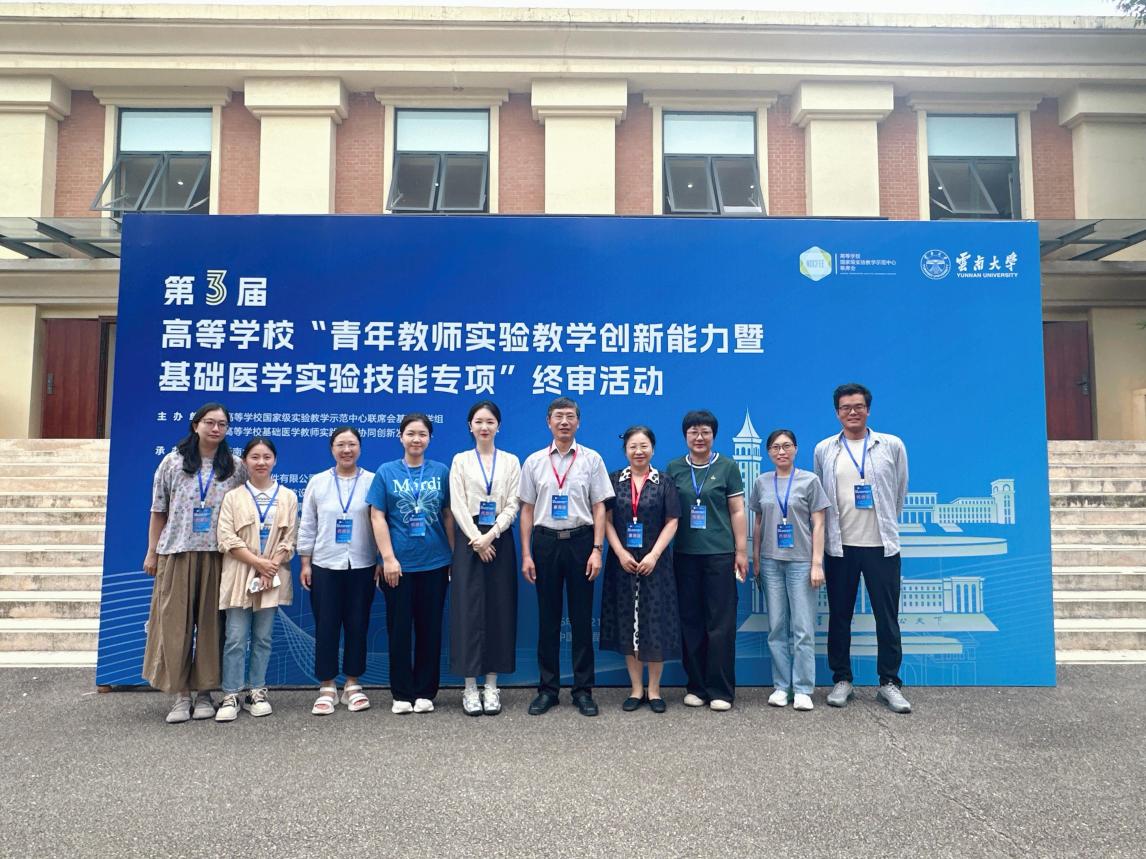
(First Review: Wang Lei; Second Review: Kong Delong; Third Review: Han Hongliu)

