On the afternoon of October 24, the Academic Committee Meeting of the Provincial University Key Laboratory of Immunity and Metabolism and the Jiangsu International Joint Laboratory of Immunity and Metabolism was successfully held. Professor Zhang Xueguang, Chairman of the Academic Committee from Soochow University; Professor Jiang Zhengfan, Vice Chairman of the Academic Committee from Peking University; Professor Lü Liwei from the University of Hong Kong; and committee experts including Professor Hua Zichun from Nanjing University, Professor Liu Wanli from Tsinghua University, Professor Zhang Xiaoming from the Shanghai Institute of Materia Medica, Chinese Academy of Sciences, and Professor Wang Jinsong, Founder of Harbour BioMed, attended the meeting. Professor Wang Wenshi, Director of the Key Laboratory; Professor Zheng Kuiyang, Chinese Co-Director of the Joint Laboratory; and Professor Huang Xufeng, International Co-Director of the Joint Laboratory from the University of Wollongong, Australia, were present at the meeting. The meeting was chaired by Professor Zhang Xueguang, Chairman of the Academic Committee.
At the outset, Professor Wang Wenshi, Director of the Laboratory, extended a warm welcome to all experts of the Academic Committee and expressed sincere gratitude for their long-standing careful guidance and strong support for laboratory development. Highlighting the interdisciplinary strengths of immunity and metabolism, Professor Wang reported the laboratory’s achievements over the past decade from multiple dimensions: refinement and layout of research priorities, recruitment and cultivation of high-caliber talents, tackling key research projects, output of high-level academic outcomes, training of young backbones and postgraduate students, upgrading of research platforms and infrastructure, opening-up and international collaboration of the joint laboratory, achievement translation and social services. He also objectively analyzed existing bottlenecks and deficiencies, and elaborated on the key construction tasks and development roadmap for the next phase.
The experts affirmed the laboratory’s progress and put forward development targets for the next stage. Professor Zhang Xueguang delivered the concluding remarks. He spoke highly of the laboratory’s development and fully recognized its achievements in advancing the cutting-edge interdisciplinary field of immunity and metabolism, producing high-quality research outputs, building talent pipelines, nurturing researchers through research and education, upgrading research infrastructure, and conducting collaborative research via international exchanges. He emphasized that the laboratory should closely align with national demands for the prevention and treatment of major diseases, further strengthen the integration of basic research and clinical application, and expand international cooperation. He expected the laboratory to uphold its mission as a provincial key laboratory, coordinate scientific research with teaching, enable research innovation to feed into talent cultivation, strive to produce more distinctive original landmark achievements, continuously enhance its academic competitiveness and comprehensive capacity to support regional medical and health services, and reach new heights in disciplinary development, acquisition of major research grants, and translation of research findings.
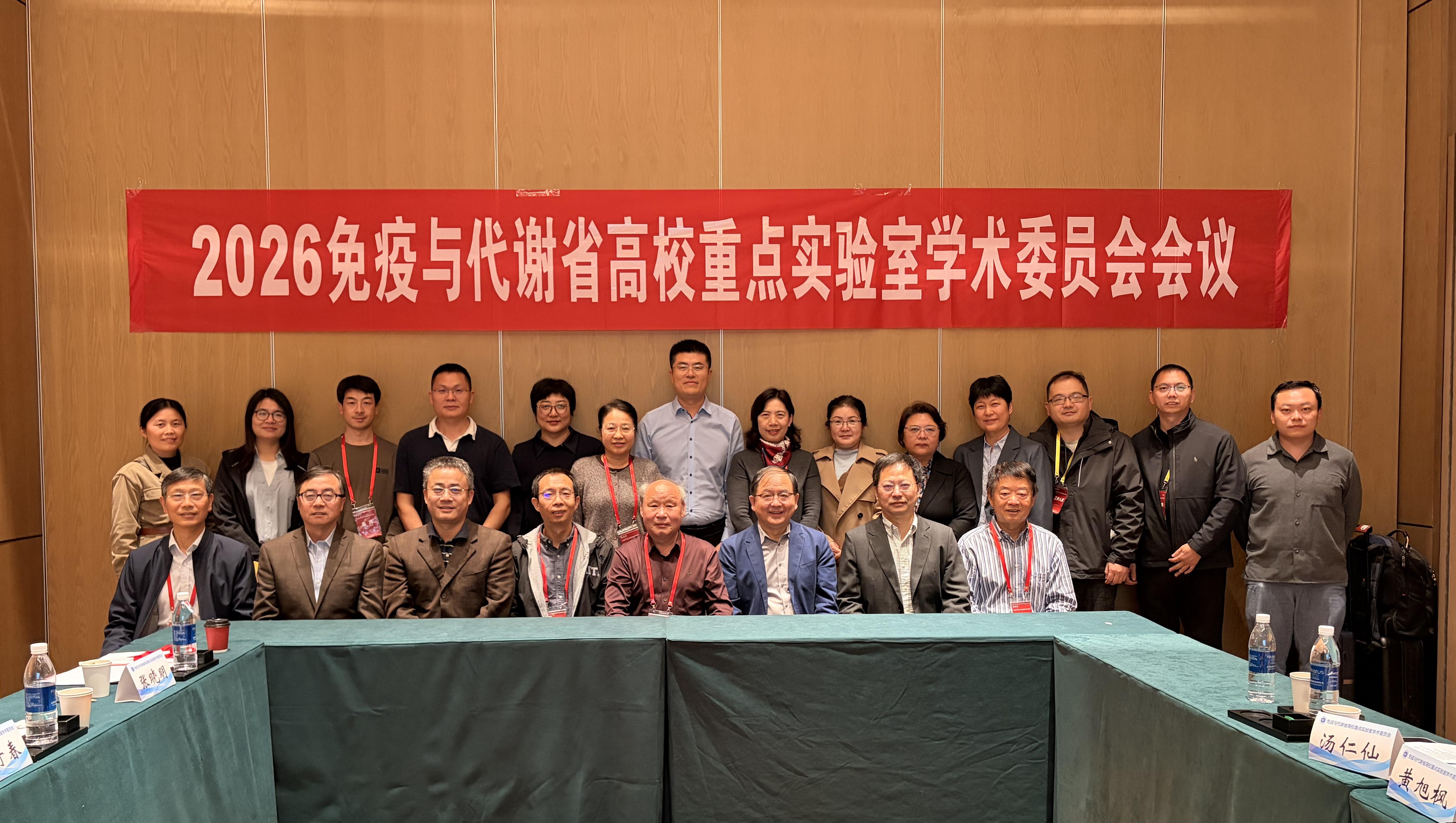
(First reviewer: Li Li; Second reviewer: Wang Wenshi; Third reviewer: Han Hongliu)

