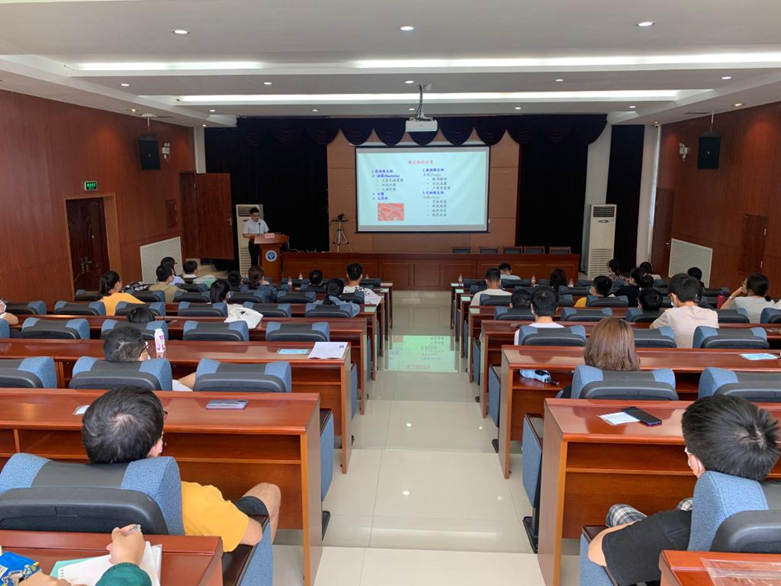
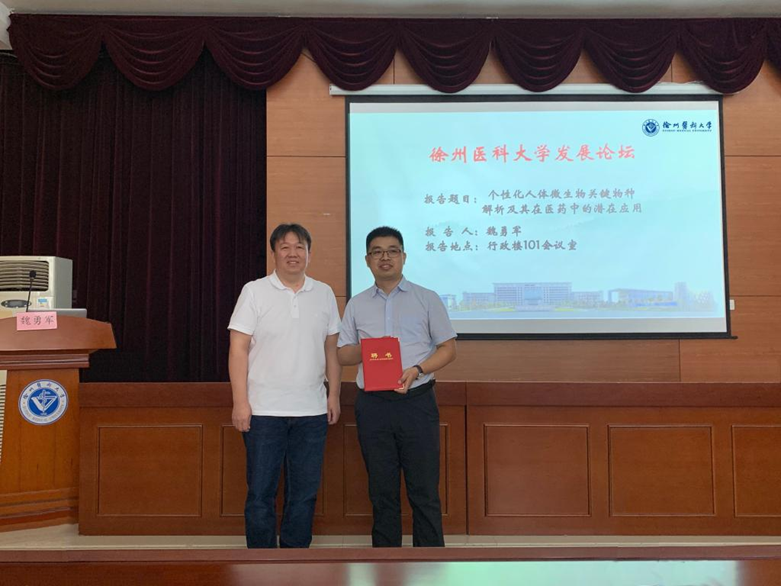
On September 18, 2020, invited by the School of Life Sciences and Jiangsu Key Laboratory of Brain Disease Bioinformation at Xuzhou Medical University, Dr. Wei Yongjun from the School of Pharmaceutical Sciences of Zhengzhou University visited our university. He delivered a special report entitled Analysis of Key Species in Personalized Human Microbiome and Its Potential Applications in Medicine and conducted in-depth academic exchanges.
In his report, Dr. Wei systematically illustrated the current domestic and international research status of microbiology from four perspectives: the basics of microorganisms, the relationship between microorganisms and human development, mainstream microbiological research methods, and the application prospects of microorganisms. He shared the latest research achievements of his research group on the analysis of oral and intestinal microbial communities, and elaborated on the methods for analyzing and identifying key microorganisms in microbial communities through microbiomics. Furthermore, Dr. Wei prospected multiple strategies for the precise regulation of intestinal microbial communities using prebiotics and their potential applications in human health. He also briefly introduced the research progress of his team in producing active ingredients of plant natural products using engineered yeast. In addition, Dr. Wei shared his experience in guiding undergraduate innovation and entrepreneurship training teams, and gave practical guidance to undergraduate and graduate students present on conducting literature research and scientific research more effectively.
Teachers and students in attendance had enthusiastic discussions with Dr. Wei on hot topics including the application of microbiomics in precision medicine and pharmaceutical research and development, as well as synthetic microbial flora. After the lecture, the School of Life Sciences appointed Dr. Wei as an off-campus supervisor for undergraduate students and presented him with a letter of appointment. Both sides agreed to further strengthen exchanges and cooperation in scientific research and student training.